DEC 9 2025
VISITING AUTHOR: PATRICK J. McGINNIS
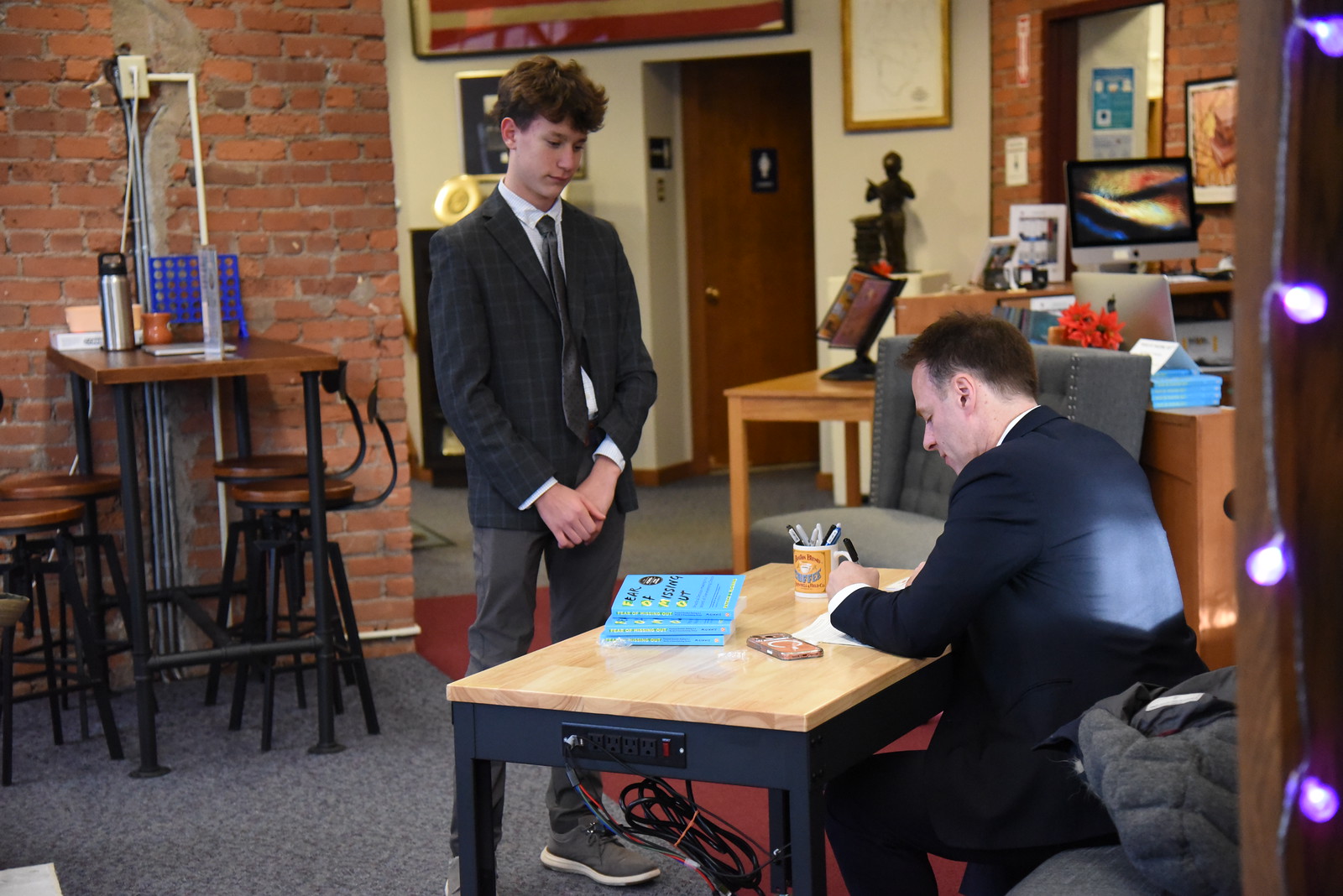
The fear of missing out, or FOMO, is a concept that everyone has heard of or, more likely, felt themselves, but few know the man who coined the term. On Monday, December 8, the school welcomed that man, Patrick J. McGinnis, to speak through the latest installment of the Visiting Author Program.
Originally from rural Maine, McGinnis graduated from Georgetown University and then Harvard Business School. He is a venture capitalist, bestselling author, and creator of the hit podcast FOMOSapiens, and he still finds time for travel, having visited more than 120 countries. He also serves on the boards of Bridge USA, a campus-based youth movement fighting political division through dialogue, the Leadership Now Project, and the Planet World Museum in Washington, DC.
His professional work centers on the intersection of decision-making, influence, and entrepreneurship. Most notably, he coined the term FOMO and its lesser-known twin, FOBO (Fear of a Better Option), in a 2004 article at Harvard Business School. His book on the subject, Fear of Missing Out: Practical Decision-Making in a World of Overwhelming Choice was chosen as this past summer’s all-school read.
McGinnis began his visit to Avon with a presentation to a capacity crowd in the Brown Auditorium. He provided the background to what led up to the creation of “FOMO.” Interestingly, the story begins with 9/11. McGinnis was in Manhattan when the terrorist attacks took place, and it completely changed his outlook on life. Suddenly, nothing seemed guaranteed and he felt he needed to try to experience everything he could. “I was living life on 150 percent.”
This mentality continued as he began attending Harvard Business School, but he soon realized this way of living wasn’t beneficial or sustainable. “I was constantly tired. I was constantly leaving to go somewhere else. I wasn’t actually having fun,” he explains. He reflected on why he was feeling this way and wrote a satirical article for the Harvard newspaper that outlined the concepts of FOMO and FOBO. He thought at the time that these feelings would end after he left school, but with Facebook being invented across campus at the same time, the opposite would occur. Not only would social media take the feeling of FOMO to a whole new level, but his schoolmates would also bring the term with them into the world outside of Harvard. The rest, you could say, is history.
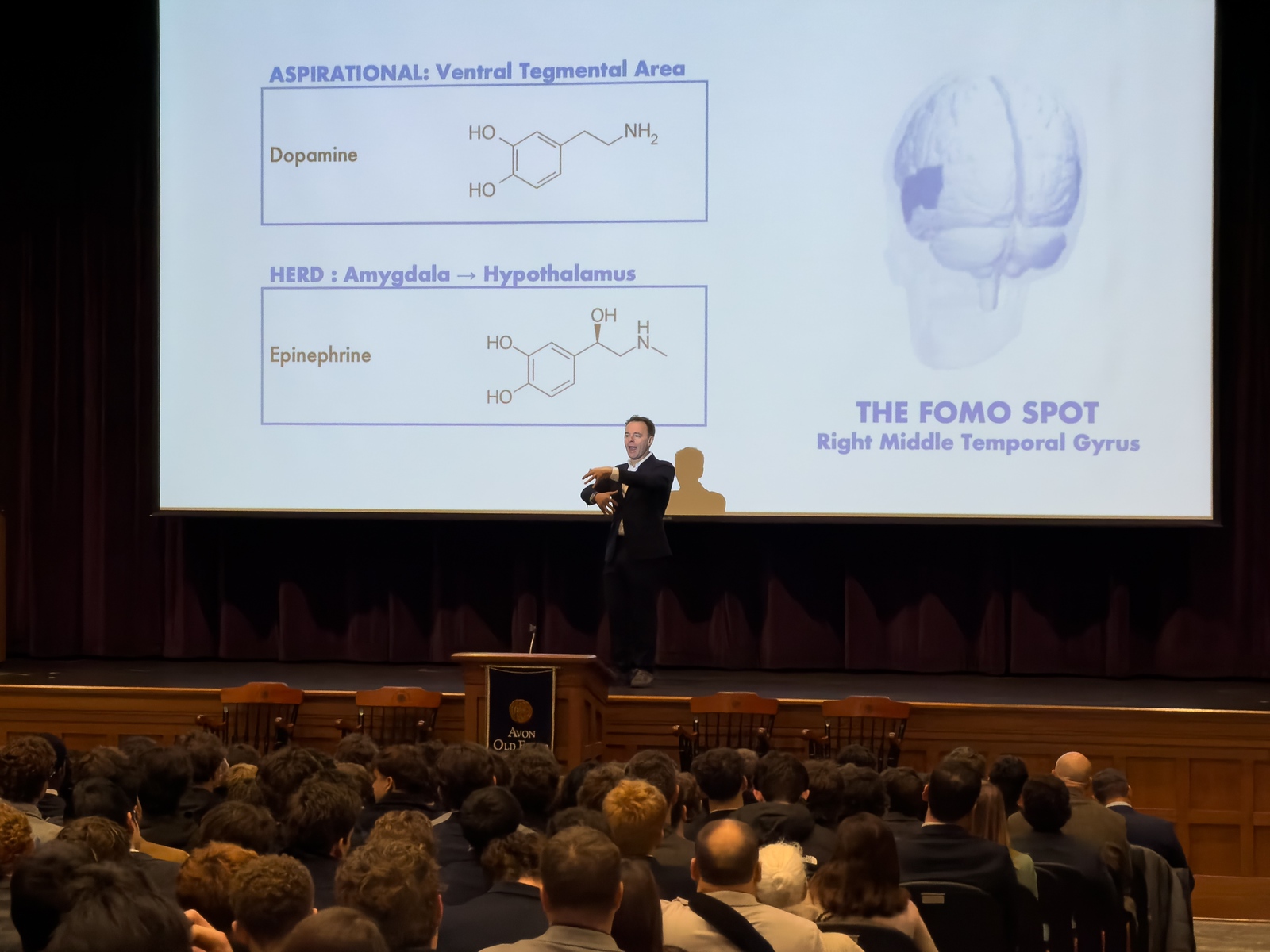
During his talk, McGinnis explained the two types of FOMO: Aspirational, the feeling that you could be doing something great, and herd, a social pressure to join a collective experience. He also delved into the physiological causes of FOMO and how it is influenced by our brain chemistry.
The concept of FOBO was also outlined, which was especially relevant for seniors in the room making the decision of where to go after Avon. “FOBO really comes up when applying to college, so a lot of you have probably been experiencing this recently,” McGinnis explained.
For the seniors stressing over this decision, and for the other students and faculty in the room, McGinnis offered a few ways to overcome these feelings of fear. “Focus on the facts. FOMO is a result of perception, not reality,” he said. “Take time away from FOMO drivers like social media before making any decision.” He also advised students to instate a 24-hour rule: instead of just saying yes to everything, wait a day for the emotions to leave the situation and see if logic still says you should move ahead. He said that meditation is also a very effective tool in combatting FOMO and FOBO, and he shared that his daily meditation is likely responsible for his increased mental resilience.
After his presentation, there was an opportunity for questions before McGinnis met with smaller groups for a more intimate discussion. Questions from students varied from clarifying the difference between FOMO and jealousy, how to decide between being happy with what you have and being aspirational, and how his world travels have changed his perception of FOMO.
Andrew Kibler ’26 took this opportunity to get some tips for his role as Captain Avon and as a member of the Student Council. He picked up some new strategies on how to inspire his peers to attend Avon athletic contests and guidance on using LinkedIn and other professional development tools that he could share with the rest of the student body. “I think it’s good to bring people like Mr. McGinnis in for advice. I definitely think we can implement a few of his ideas,” Kibler said.
Liam Boone ’26 stayed after his class period ended to ask a few more questions about avoiding FOMO when traveling to new places. “I thought he had interesting insight,” Boone said. “He offered good advice throughout his visit.”
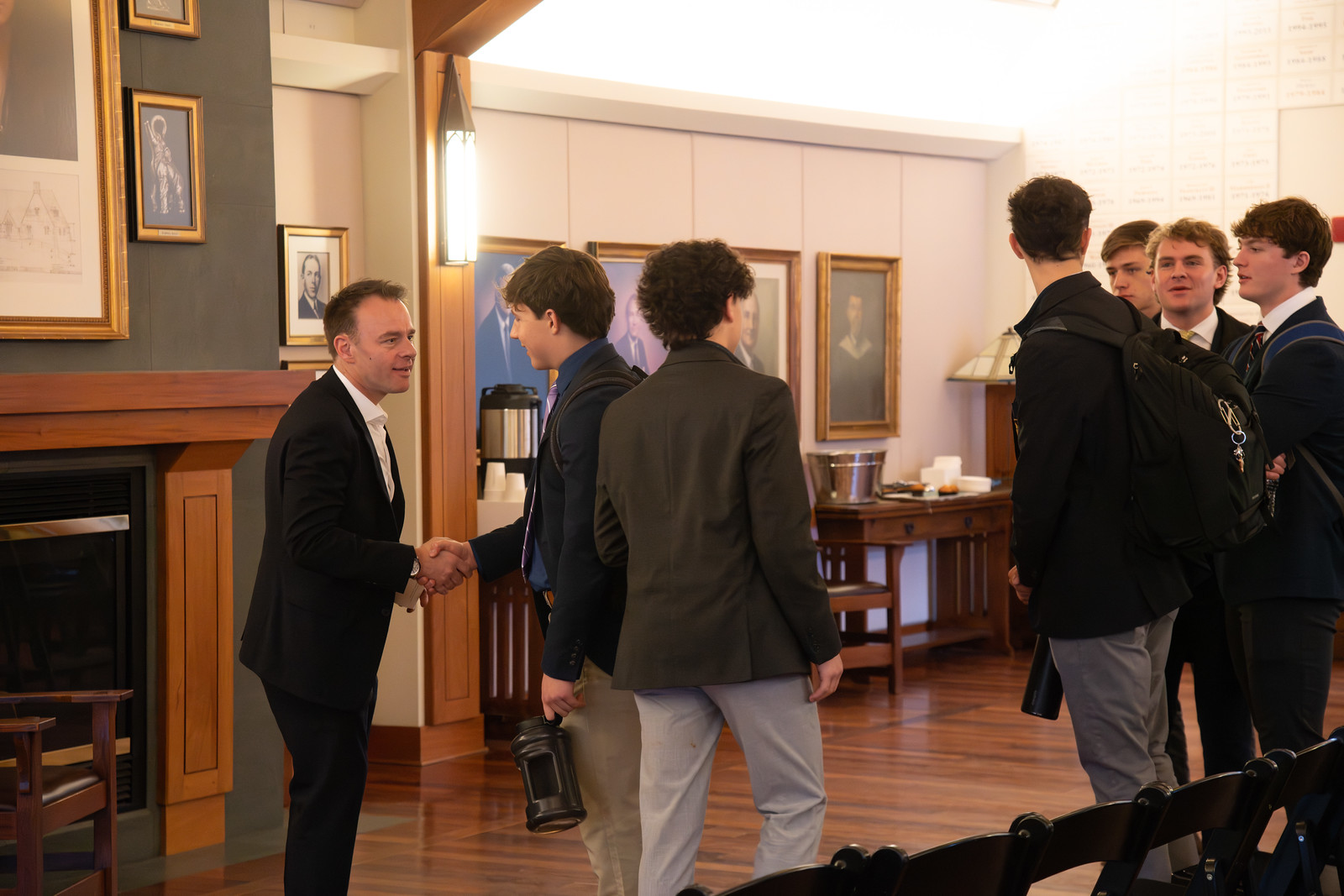
For McGinnis, it was actually his first time presenting to a high school crowd, and he was pleasantly surprised by the Winged Beavers in attendance. “I found the boys to be a really attentive audience. The students here are a pretty sophisticated group, but they’re also more curious and open than other groups I’ve spoken with.” He even admitted to feeling a bit of FOMO for having not had the chance to attend Avon himself.
For anyone interested in learning more about McGinnis’s work, you can tune in to his podcast or read Fear of Missing Out: Practical Decision-Making in a World of Overwhelming Choice.
More News
|
|
-

An Update from the Alumni Council
Our Alumni Council had their first meeting of the 2026-27 school year during Reunion Weekend. Meet this year's new members and find out what was discussed.
-

Captain's Corner: Cross Country
The cross country team is faster than it's ever been, and our runners have their aspirations aimed at a Founders League championship. We sat down with senior Teddy Hoffman '27 to find out how the season has gone so far.
-

Featured Alumnus: Jimmy Little '06
A story of perseverance. Read more to find out how one Avonian recently upheld the school's motto in an extraordinary way.