APR 10 2026
Evans History Initiative 2026: Analyzing the Meanings and Uses of the Declaration of Independence at 250 Years
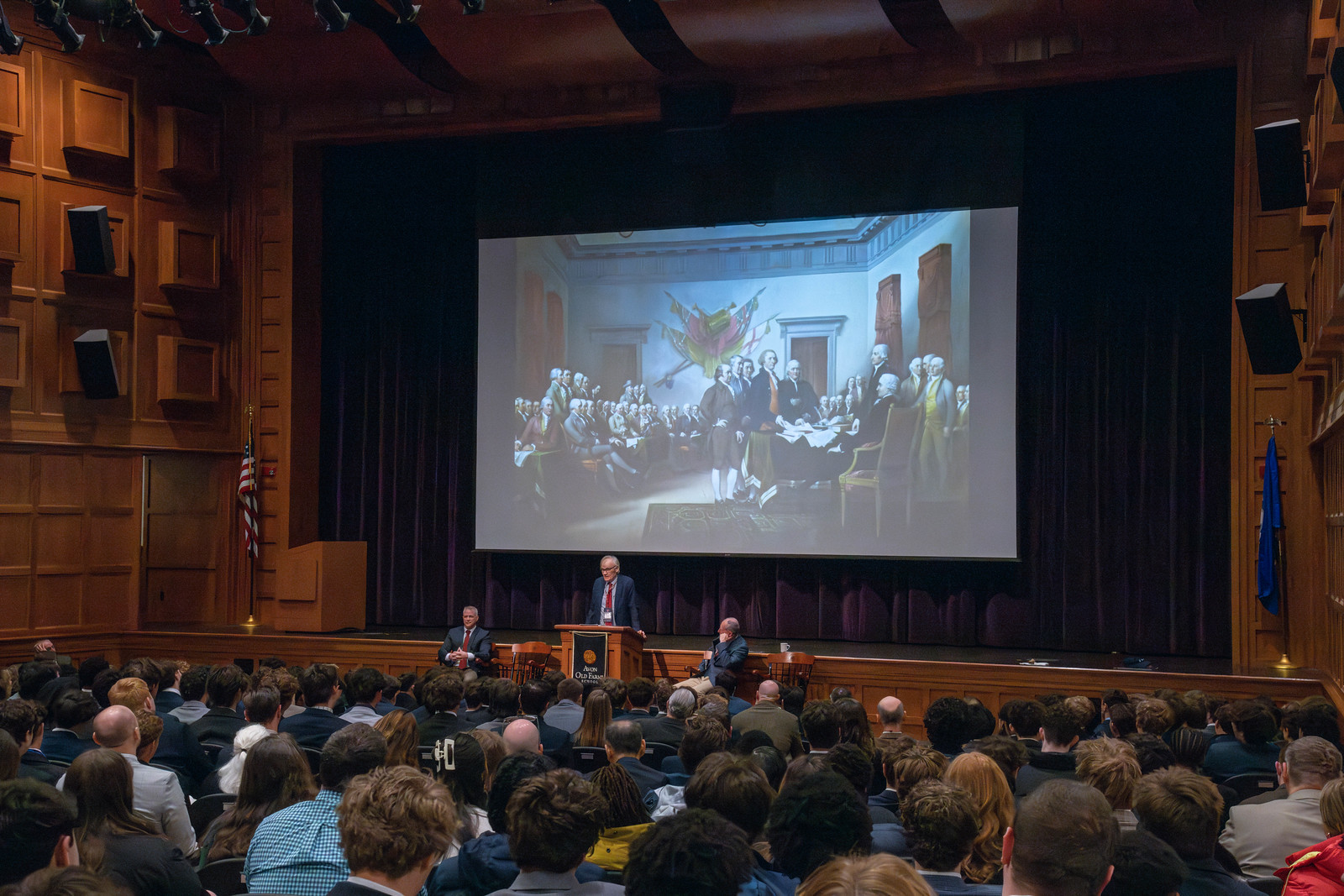
On Thursday, April 9, historians and scholars gathered at Avon Old Farms School to take part in the latest academic conference organized for the Evans History Initiative. This time, the topic of discussion was the Declaration of Independence and what it means as we approach the document’s semiquincentennial later this year.
As is always the case, the Evans History Initiative, named for legendary AOF history teacher Peter Evans P’98, was made possible was made possible through the generosity of John Drew P’85, ’87, GP’17, ’18, ’24; Chris Drew ’85, P’17, ’18; David Drew ’87; and Katherine Drew P’24. Chris and his wife, Katie Martin P’17, ’18, were in attendance for the day's events.
The conference began at 8:30 a.m. in the Brown Auditorium with the keynote address delivered by David Blight, a Yale Professor & Pulitzer Prize-Winning Author of the book Frederick Douglass: Prophet of Freedom. He began by expressing his awe of the setting. “What a beautiful place,” he said. “If I had taught in a place like this, I probably never would have stopped teaching high school.”
He then laid out several reasons why it’s necessary to acknowledge the Declaration’s anniversaries; it makes us think about the nation in its entirety rather than focus on our local culture and communities, it gives us reason to pause and reflect which is always a useful practice, and because there ends up being a valuable discussion about whether or not the values set forth in the Declaration are still being upheld in the country today.
 Blight took students through the past major anniversaries of the nation’s birth. In 1876, for the 100th anniversary, one in five Americans traveled to Philadelphia to celebrate the occasion. Everyone in the country was still recovering from the Civil War, and there were other sources of conflict on the horizon. In response, President Ulysses S. Grant told citizens the celebration should be about healing. For the 200th anniversary, there was more conflict within the nation. The major civil rights movements were still ongoing and the polarizing war in Vietnam was another point of contention. Again, President Gerald Ford marked the occasion as an opportunity for healing. “What are we trying to heal from at this anniversary? Will it be about healing at all?” Blight posed these questions and several others to the audience.
To conclude his speech, Blight advised students to read Frederick Douglass’s 1852 speech titled, “What to the Slave is the Fourth of July.” He said that the speech is a reminder that no matter what is happening within the country, “there is still time to live up to the Declaration of Independence.”
History teacher Dr. Chris Doyle, who led the organization of the event, explained why he was happy to have Blight deliver the keynote address. “David Blight’s work has shaped the way I teach American history,” Doyle said. “His work has never been so important.”
Students also appreciated the opportunity to hear from the renowned educator and scholar. “He was definitely entertaining and had some interesting points,” said Peter Schuchardt ’28. “He was pretty funny too, which I appreciated.”
Following the keynote speaker, the day consisted of several breakout presentations and discussions that explored how the creeds and values established in the Declaration of Independence have been upheld or challenged at different points in history.
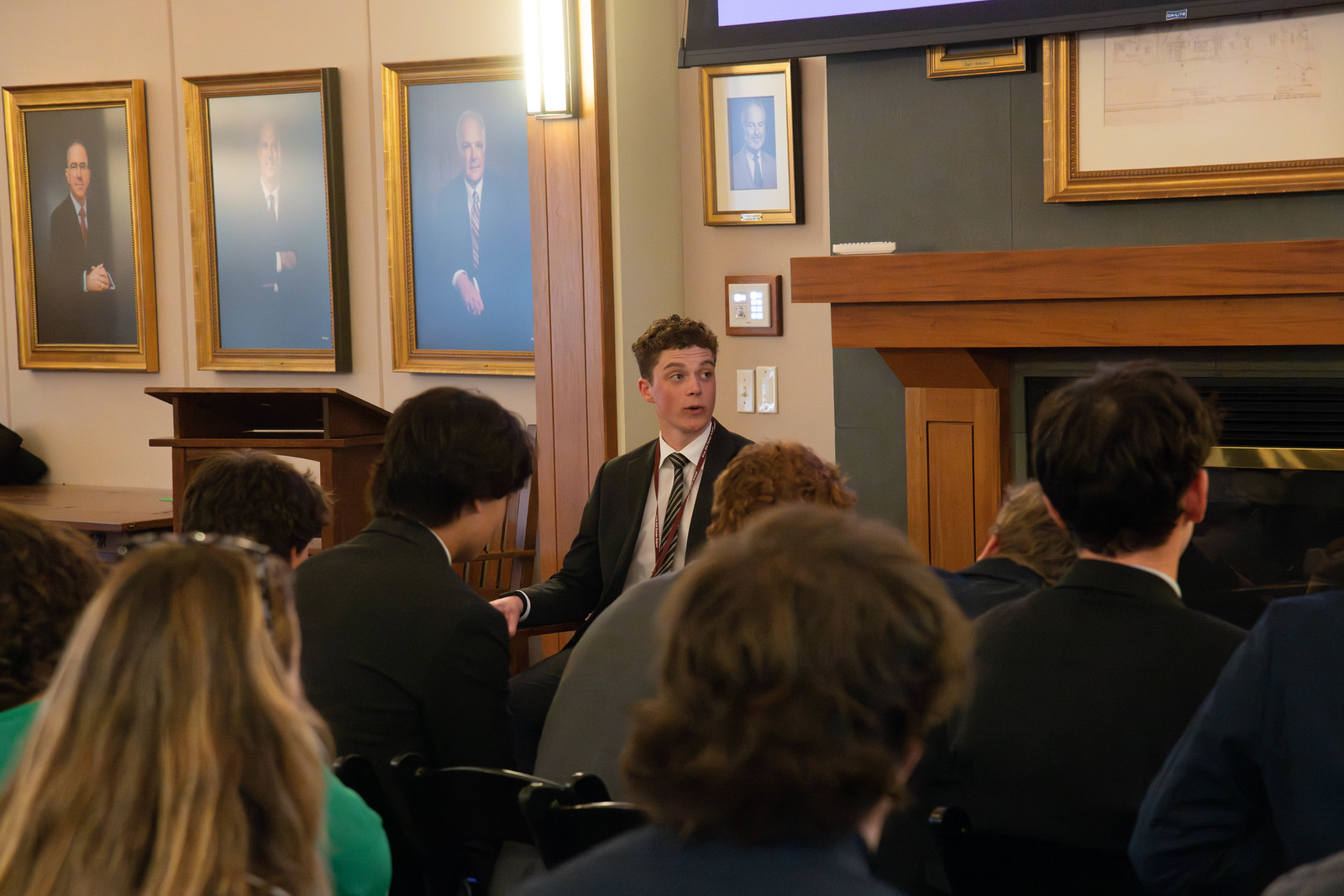 Several of Avon’s own faculty and students were selected to present. English teacher Allison Young explored how life, liberty, and the pursuit of happiness—values famously included in the Declaration—have been reflected through American literature, and how the depictions of those values have changed. History teacher and veteran Eric Lundell led a discussion on the Diplomacy of Decolonization. A group of freshmen delivered a presentation analyzing how the internment of Japanese-Americans during WWII was an example of the country not practicing what had been written in our founding document.
Nathaniel Orsen ’28, led his own session where he discussed the contradiction between the country’s goals in the Vietnam War and the simultaneous Civil Rights movements happening at home. “It went well. I thought I was going to be a lot more nervous than I was,” Orsen said.
For Orsen, a sophomore from Skaneateles, N.Y., the conference offered him the chance to further explore his interests while honing important life skills. “I wanted to present to show myself that I’m able to do it and to practice my public speaking,” Orsen shared. “I want to work with history in the future, I’m really interested in it. This was a chance to involve myself in deeper thinking about history, more than just a quick lesson in class.”
The day wrapped up with a smaller, more intimate discussion opportunity back in the Brown Auditorium. At the conclusion of the day, Doyle reflected on what he hopes students took away from the event. “Every generation of Americans has had to reinvent or rediscover what the Declaration means. I think one common thread in all of the sessions today was a call for our students to all be a part of that exploration and reinvention.”
More News
|
|
-

Featured Alumnus: Jimmy Little '06
A story of perseverance. Read more to find out how one Avonian recently upheld the school's motto in an extraordinary way.
-

Captain's Corner: Cross Country
The cross country team is faster than it's ever been, and our runners have their aspirations aimed at a Founders League championship. We sat down with senior Teddy Hoffman '27 to find out how the season has gone so far.
-

An Update from the Alumni Council
Our Alumni Council had their first meeting of the 2026-27 school year during Reunion Weekend. Meet this year's new members and find out what was discussed.